🇮🇹 The Trulli of Alberobello
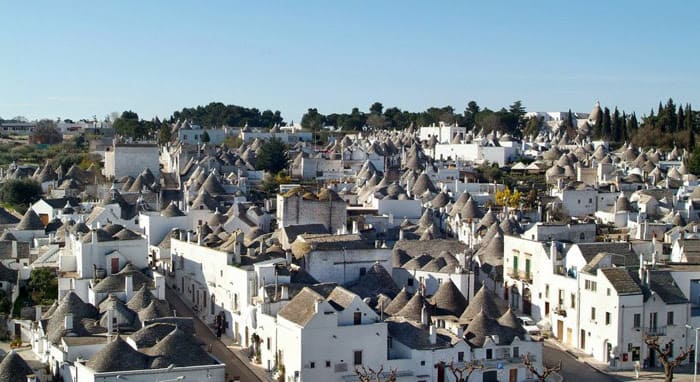
In the Puglia region of southern Italy sits a small town called Alberobello, home to around ten thousand people and a thriving olive trade. Its defining feature is a sea of whitewashed limestone houses topped with conical roofs — roughly a thousand of them, and a genuinely remarkable sight. Little wonder it is nicknamed the town in paradise.
But why did such an unusual style of building take hold here?

Rewind to the sixteenth century, when taxes were levied according to the number of houses. The local lord, the Count of Conversano of the Acquaviva family, had in fact founded the town without the king's permission. To dodge the tax, he ordered the villagers to dismantle their own homes — and the quickest way to do that was to take off the roof. A house without a roof looked unfinished and therefore uninhabited. So every time an official came to inspect, the villagers removed their roofs and put them back once the visitors had gone. And that is how trulli architecture was born.
By 1797, a group of villagers had appealed to the Bourbon king Ferdinand IV, and the Acquaviva family's rule finally came to an end, returning the town to the crown.

The trulli are spread across two districts. Rione Monti is the one lined with souvenir shops and restaurants; Rione Aia Piccola is where locals actually live. The residential district is naturally the better bet for photographs — quiet, with far fewer people — but do keep your voice down and respect the residents' daily routine.
While you are admiring the town, do not miss the local Puglian cooking either: burrata, orecchiette pasta and more. Travel can have real depth to it.

Image source: http://www.expoaus.org
World Heritage file
The Trulli of Alberobello
Year inscribed: 1996
Category: Cultural heritage
Getting there: about one and a half hours from Bari, Italy, on the Ferrovie del Sud Est railway
 Japan eSIM | DJB
 South Korea eSIM | DJB
 Thailand eSIM | DJB
 Americas eSIM | DJB
 Americas eSIM | DJB
 Philippines eSIM | DJB



Comments (0)