 Japan eSIM | DJB
 South Korea eSIM | DJB
 Thailand eSIM | DJB
 Americas eSIM | DJB
 Americas eSIM | DJB
 Philippines eSIM | DJB



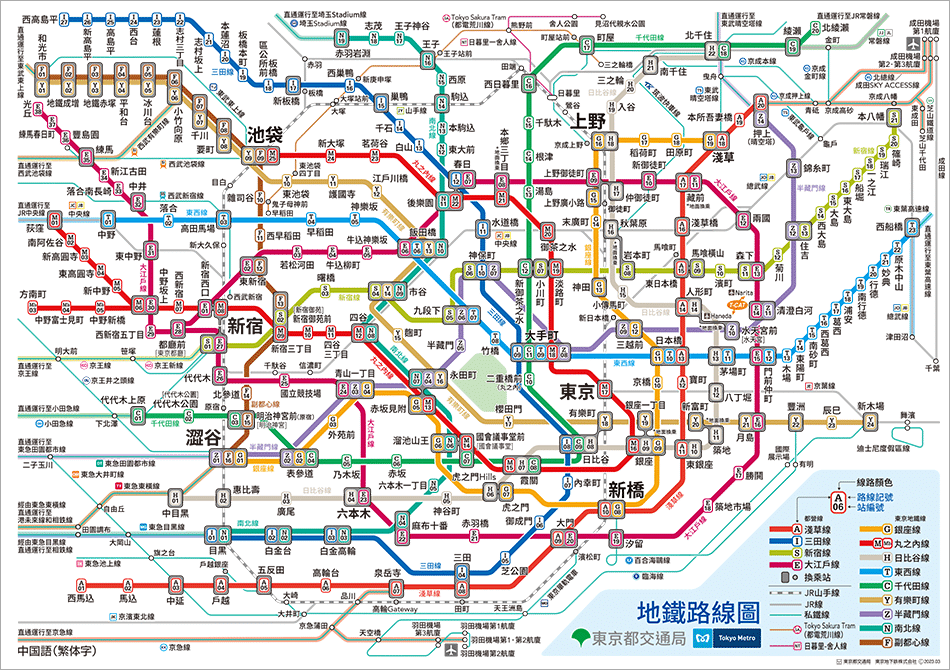
As a girl who loves travel and exploring new cities, Tokyo has always felt to me both captivating and a little overwhelming — especially that jaw-dropping Tokyo subway map! The city's subway system is genuinely intricate, and taking a wrong direction can easily cost you an extra hour (not exaggerating!). But once you understand how the Tokyo subway works, paired with a handy Tokyo subway app, you'll navigate this neon-lit city like a true local. This article walks you through how to read the Tokyo subway map, recommends must-have transit apps, unlocks the most cost-effective transit passes, and finishes off with tips to avoid getting lost! 📍
📍 Tokyo subway overview: understand this map, and you're halfway there!

Tokyo's subway is similar to Taiwan's MRT, mainly running throughout central Tokyo, and splits into two systems: "Tokyo Metro" and "Toei Subway." Simply put, two different companies operate each network, but the two frequently intersect — sometimes you need to exit through the gate to transfer, sometimes you don't, which can get a little confusing. JR, meanwhile, works more like a train or high-speed rail, running from central Tokyo out to the suburbs and even up to Tohoku — the JR line you'll ride most often while sightseeing in Tokyo is the Yamanote loop line.
- Tokyo Metro (9 lines, 185 stations)
Operated by Tokyo Metro, these lines mostly run through central Tokyo, including familiar names like the Ginza Line (G), Marunouchi Line (M), and Hibiya Line (H) — all frequently used lines for sightseeing.

- Toei Subway (4 lines, 106 stations)
Operated by the Tokyo Metropolitan Government, these four lines are a bit more spread out, like the Oedo Line (E) which loops around the city, and the Asakusa Line (A) which connects directly to Narita and Haneda airports. There's also the Mita Line (I) and Shinjuku Line (S).

💡 A quick tip: if you see a "Tokyo Metro" or "Toei" logo on a subway sign, don't confuse them! At some stations, transferring between the two requires exiting through the gate and re-entering, which is exactly why choosing the right ticket matters (more on that below!).

📍 A guide to key lines: master these few, and sightseeing becomes a breeze!
While Tokyo's subway has 13 lines in total, if you're visiting as a tourist, you really only need to master these few to get around smoothly:
- 📍 Ginza Line (G): Tokyo's oldest subway line, running through popular sightseeing spots like Ueno, Asakusa, Ginza, and Shibuya.
- 📍 Asakusa Line (A): super convenient if you're heading from the airport into the city — it connects directly to both Narita and Haneda airports!
- 📍 Hanzomon Line (Z): great for anyone who loves shopping, since this line connects directly to Shibuya, Omotesando, and Otemachi (near Tokyo Station).
- 📍 Yamanote Line (a JR line, but you absolutely need to know it!): this is Tokyo's loop line, connecting major stations like Shinjuku, Shibuya, Tokyo Station, and Ueno, linking up nearly all of central Tokyo's key spots in one line — you'll definitely ride this while sightseeing!

💡 A friendly tip: download a Tokyo subway app (more on this below) so you can check routes and transfer options anytime, saving yourself from unnecessary detours!
📍 Recommended Tokyo subway apps
Honestly, without an app, Tokyo's subway can get genuinely overwhelming. Luckily, these lifesaver apps can absolutely help you handle transfers, fares, and station exit info! 📱✨
- 🚇 Japan Travel- Japan Transit Planner and travel planning
- Completely free, with Chinese language support
- Works offline, great for checking routes without a connection
- Enter your start and end points, and it finds the fastest transfer route

- 🚇 Jorudan (Norikae Annai)
- This is honestly the best app in my book!
- Supports Chinese! Supports Chinese! Supports Chinese! Worth saying three times!
- Shows transfer routes, fares, travel time, and lets you buy tickets directly, plus tells you which exit is closest to your destination!
- There's a free version and a web version, though some advanced features require payment

- 🚇 Google Maps
- Google Maps is actually pretty handy too, especially its navigation feature guiding you from the station to your destination
- Its downside is that transfer floor info inside stations isn't always detailed enough

📍 Recommended transit cards and passes: essential for saving money! 💰
Tokyo offers a huge variety of transit tickets — if you'd rather not line up to buy a ticket every time, we recommend these options 👇
- 💳 Suica / PASMO (IC cards)
- Basically Japan's version of the EasyCard, with a rechargeable balance — tap and go anywhere!
- Works on subways, buses, convenience stores, even Starbucks, sometimes with small discounts
- No expiry, and you can return the card for a refund of your deposit (¥500) before heading home
- Two companies each issue their own version: Suica and PASMO

- 🎟 Tokyo Subway Ticket (24H / 48H / 72H passes)
- Great for short-term tourists, offering unlimited subway rides!
- 24 hours: ¥800 / 48 hours: ¥1,200 / 72 hours: ¥1,500
- Only valid on Tokyo Metro and Toei Subway — JR is not included

💡 Our recommendation:
✔ If your itinerary is mainly within central Tokyo, the Tokyo Subway Ticket offers great value!
✔ If you'll also be riding JR (like taking the Yamanote Line to Shinjuku or Shibuya), Suica/PASMO is more convenient!
📍 Tips to avoid getting lost: a Tokyo subway survival guide
📍 Make good use of exit signage at stations
Tokyo's subway stations often have multiple exits — massive stations like Shinjuku or Ikebukuro can have over 20 exits! We recommend checking which exit is closest to your destination beforehand, rather than blindly walking out the wrong exit and circling half the way back 😂
📍 Pay attention to line letters and colors
Every Tokyo subway line has its own letter code and color — if you're worried about mixing up colors, memorize the letter codes instead, and you'll rarely get your route wrong!
📍 Avoid rush hour
Tokyo's subways turn into a commuter nightmare between 7:30-9:30am and 5:00-7:00pm — avoid these times if you can! 🚷
✨ Tokyo's subway really isn't that hard! ✨
Understand the Tokyo subway map, download a Tokyo subway app, and choose the right transit pass, and your Tokyo trip will run smoothly! While Tokyo's subway system is complex, mastering these tips will have you navigating the city as easily as a local! 🚇💃
If you're heading to Tokyo, remember to grab a DJB Daijobu Unlimited card, so your app stays connected while route-planning, helping you reach your destination without a hitch!
Comments are closed for this article.
Comments (0)